Every route can be tailored
The itineraries listed are starting points, not a fixed menu. Tell us how many days you have and what you want to see, and we build the route around that — not the other way around.
Walk the Peruvian Andes alongside our local guides and trek crew, on routes that thread between snow peaks and glacial lakes. The treks and hikes on this site are some of our most popular — from short day walks to long, remote crossings — and every one comes with the same personalised service. Our crews love sharing the magic of their mountains, and they will treat you as their guest and friend, not a booking.
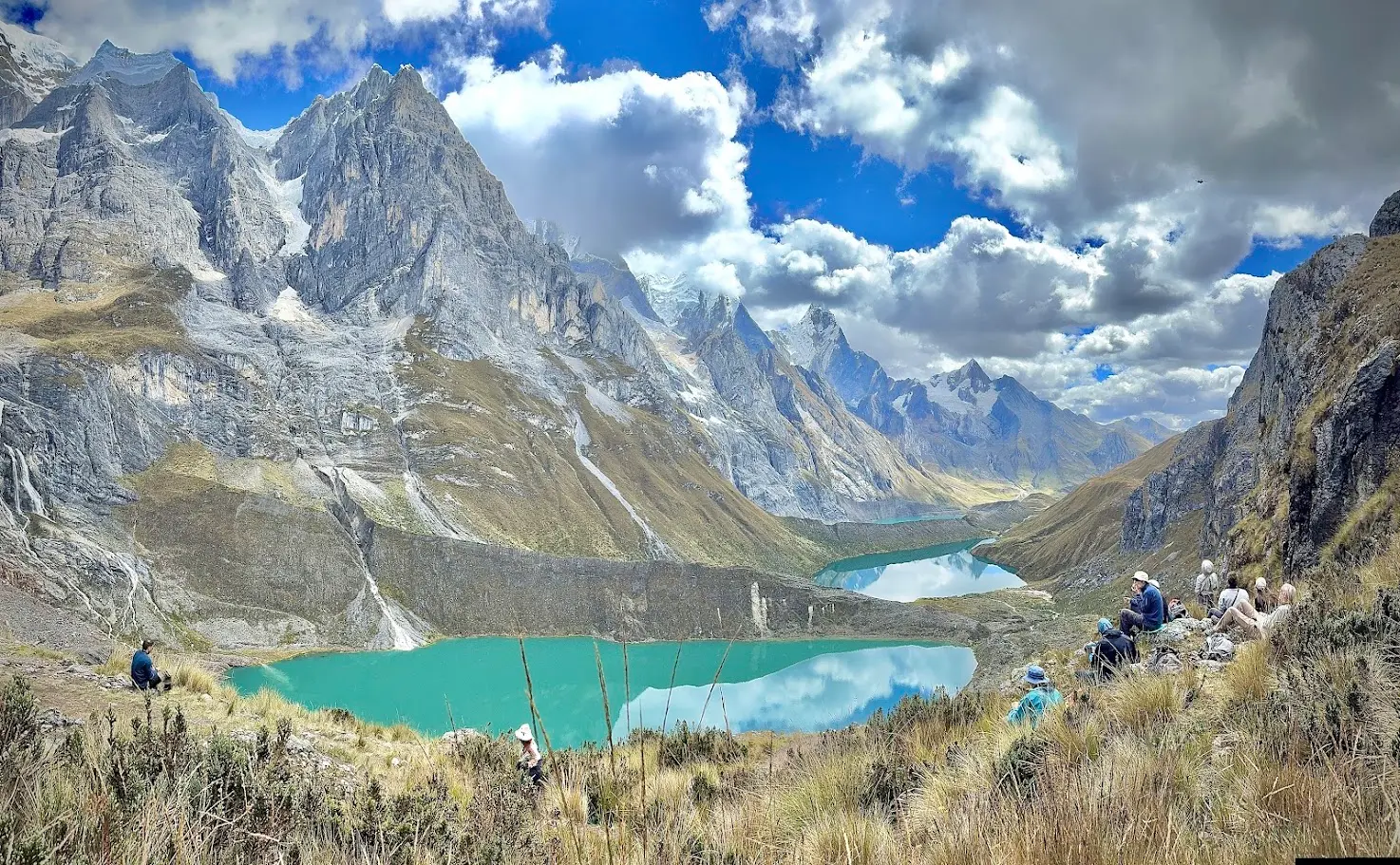
The itineraries listed are starting points, not a fixed menu. Tell us how many days you have and what you want to see, and we build the route around that — not the other way around.
A trek crew is bigger than most people expect: a cook, arrieros (muleteers) managing the donkeys, and a guide who knows the passes and reads the weather. Groups stay small, usually 6 to 8 people, so the crew can actually look after everyone.
Donkeys carry the tents, the kitchen and your duffel; you walk with just a day pack — water, camera, a warm layer. Personal duffel loads cap at 12 to 15kg depending on the route, so pack for the trail, not a suitcase.
People often ask which range is better for trekking. Both are spectacular, both are different, and honestly you cannot compare them. Each has snow-capped mountains and glaciers you walk right up to, and on most days you climb to a high pass with views that stop you in your tracks. Which one suits you is a question we are glad to talk through.
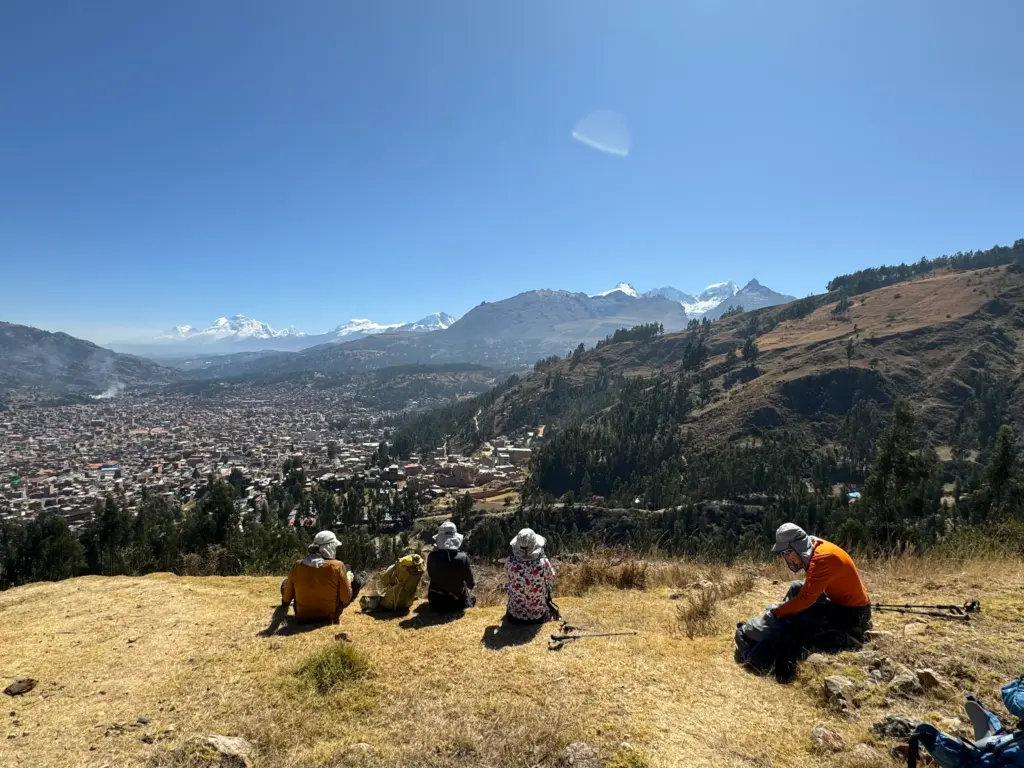
Steep-sided, narrow valleys cut deep into the range.
A microclimate in every valley, with more plants, flowers and trees than the Huayhuash.
Pockets of high-altitude Polylepis (Queñua) forest among open grassland.
More villages and small farms along the edge of the Huascarán National Park.
Home to Huascarán (6768m), Peru's highest peak, and Alpamayo, often called the world's most beautiful mountain.
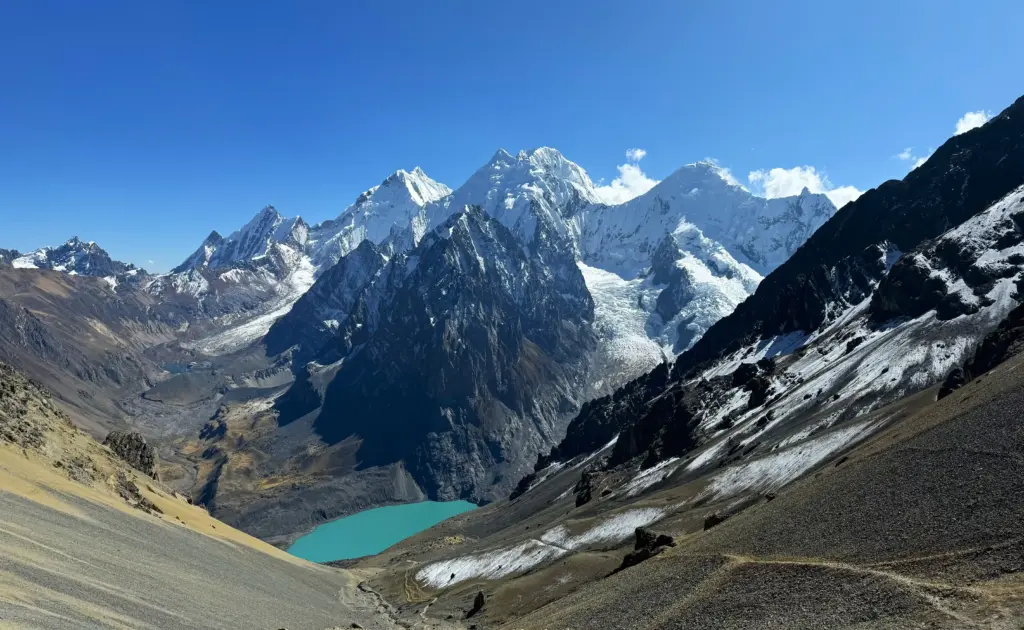
Open and vast, with wide valleys and sweeping grasslands.
Plenty of big lakes, many full of trout, with the snow peaks mirrored in the water.
Most campsites sit right beside a glacial lake.
Few people live around the circuit — a handful of farms, and the village of Llamac where our donkey drivers live.
Home to Yerupajá (6634m), Peru's second-highest peak, and Siula (6344m) of Touching the Void.
Your privacy
A quick question before you planWe would like to count visits with Google Analytics, to learn which treks people read about and which pages need work. Nothing is measured unless you agree, and you can change your mind at any time from the link in the footer. Privacy policy