Hard
Circuit of the Cordillera Huayhuash — 12 Days
Duration
12 Days trekkingBest Season
May - SeptA compact, rugged and beautifully remote range south-east of Huaraz, with 7 peaks above 6,000 metres. We have guided these circuits for decades — small groups, the right acclimatisation, and a crew who walk every pass with you.
Above 6,000 metres
Highest pass on the circuit
Full circuit on foot
From mini trek to full loop
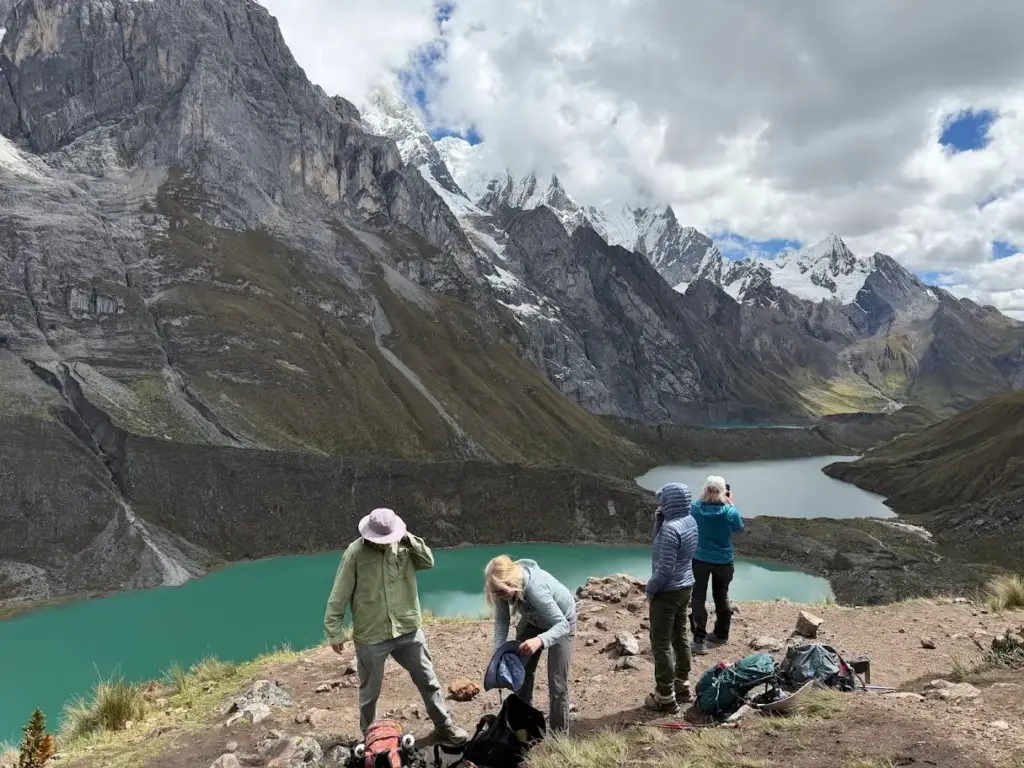
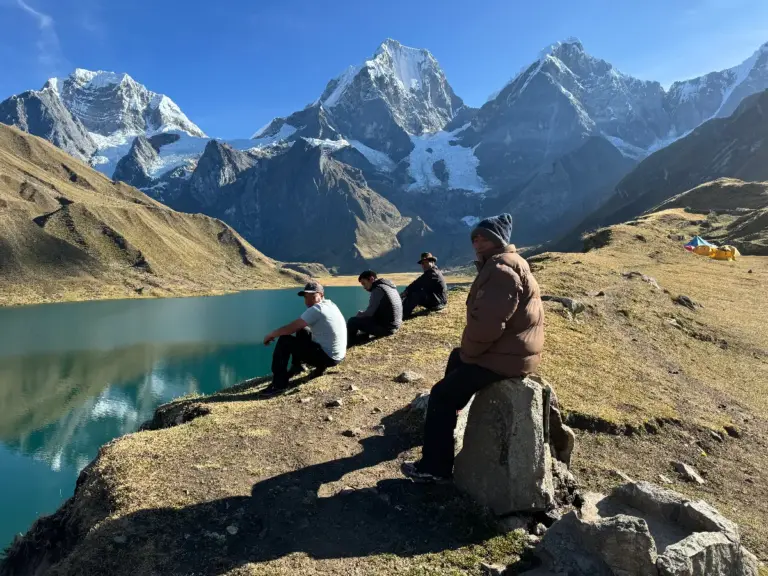
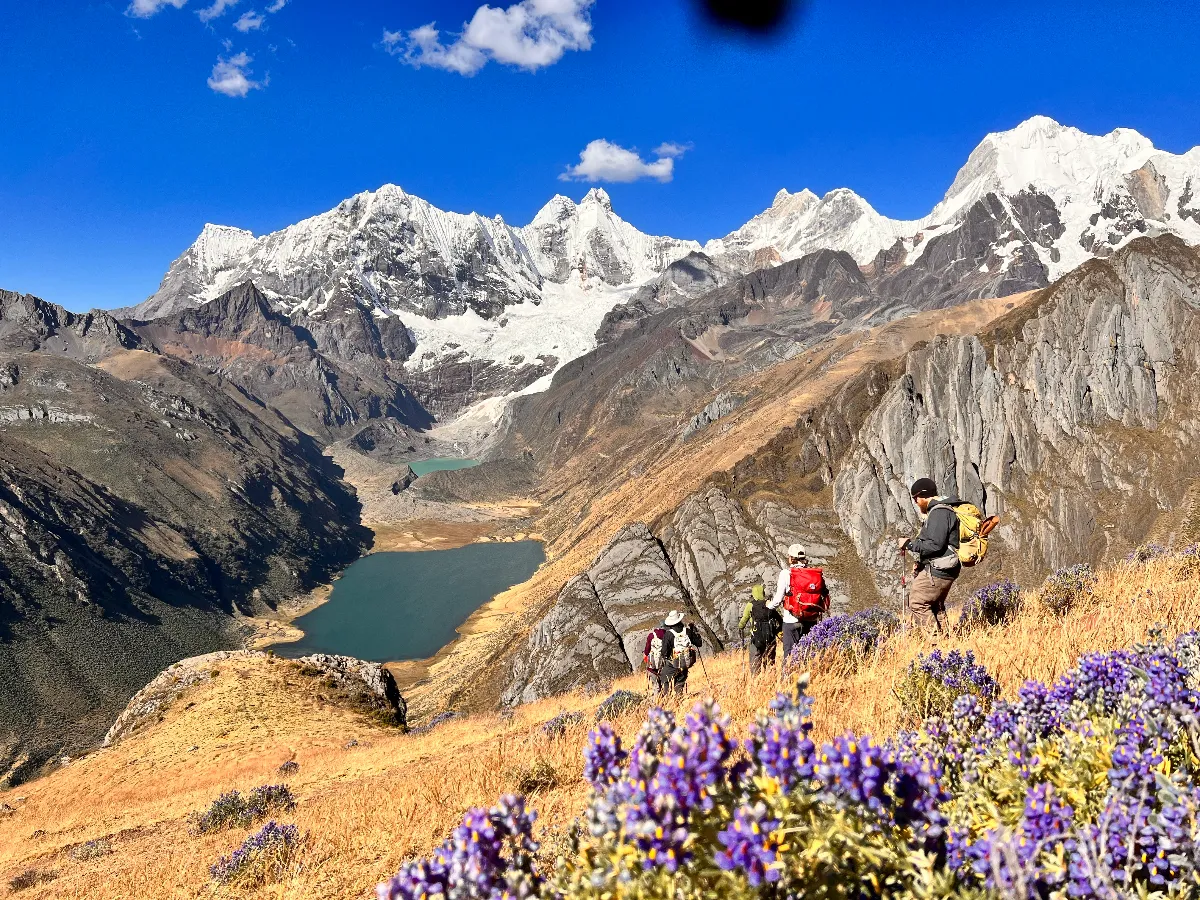
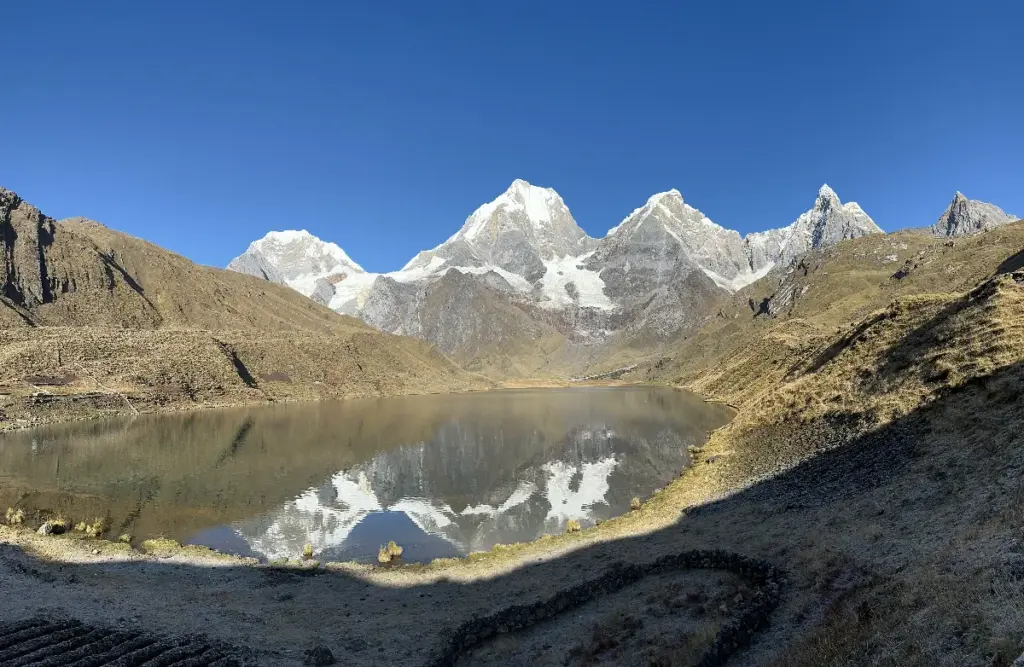
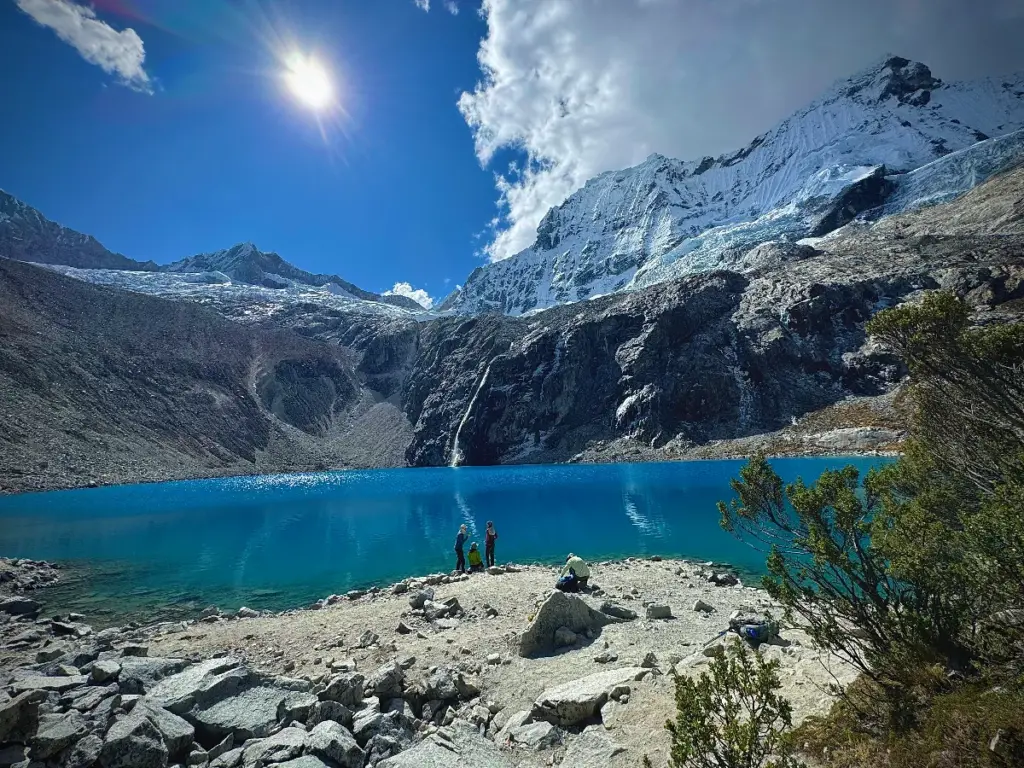
Some 50 kilometres and four hours south-east of Huaraz, the Cordillera Huayhuash is smaller, more rugged and far more remote than the Cordillera Blanca. With 7 peaks above 6,000 metres and many more past 5,500, it is widely named one of the finest trekking circuits in the world — and every day on the trail brings close views of snow-capped summits, glaciers and clear, trout-filled lakes.
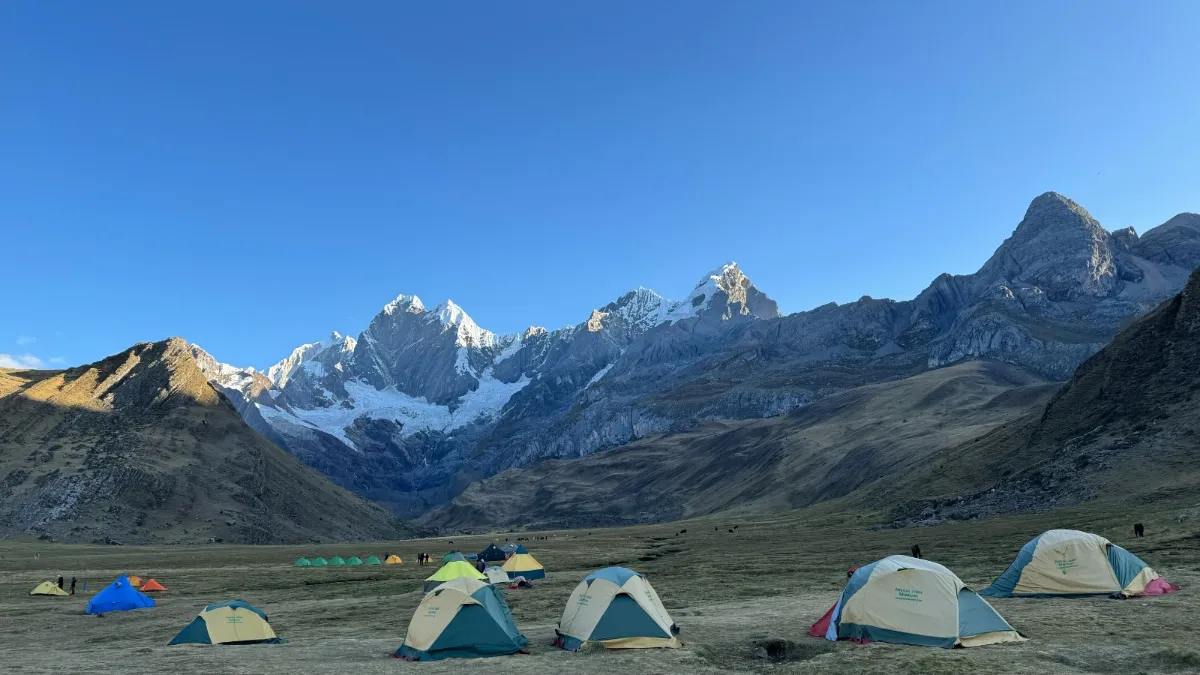
The range is crowned by Yerupajá Grande at 6,634 metres, the second highest peak in Peru, and by Siula Grande, made famous by Joe Simpson in "Touching the Void". Many of the campsites sit beside a lake, and the only real settlements are Llamac at the trailhead — where our arrieros and their donkeys live — and a couple of villages near the circuit. This is mountain country at its most open and unhurried.
From the full 15-day circuit — with the alpine crossing of Cerro San Antonio and a visit to Siula Base Camp from "Touching the Void" — down to the gentler 8-day Mini Trek and a 4-day walk to Laguna Jahuacocha. Tell us your time and pace and we will tailor the route to you.
Duration
12 Days trekkingBest Season
May - Sept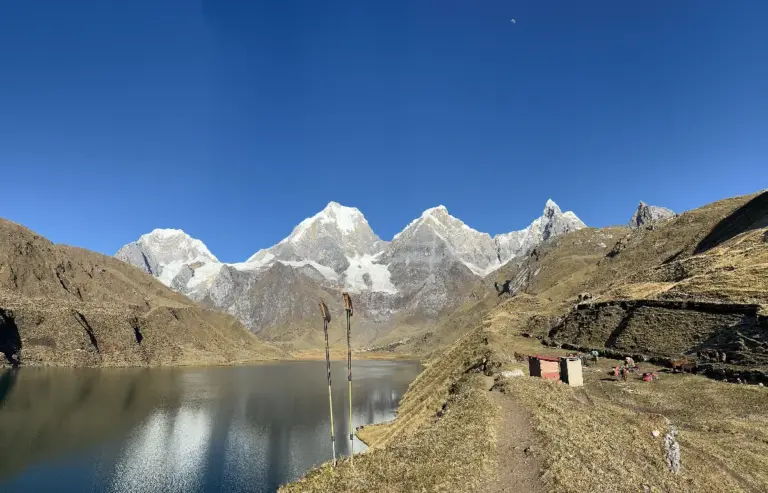
Duration
9 Days trekking (option for 8)Best Season
May - Sept
Duration
10 or 11 Days trekkingBest Season
May - Sept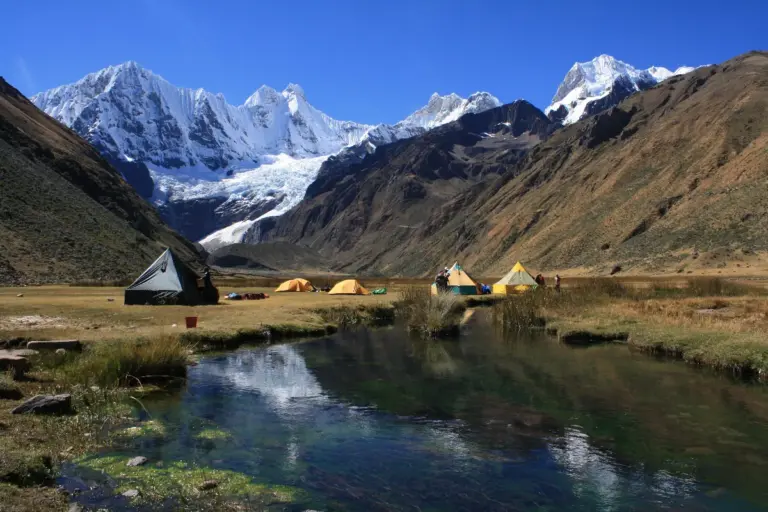
Duration
9 Days trekking (no rest days)Best Season
May - Sept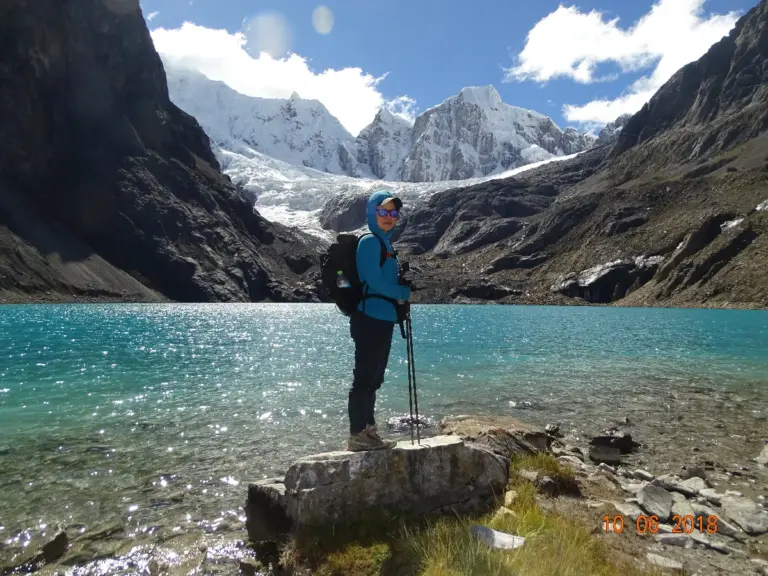
Duration
15 Days trekkingBest Season
May - Sept
Duration
15 Days trekking (options for 13 or 14)Best Season
May - Sept
Duration
10 Days trekkingBest Season
May - Sept
Duration
8 Days trekkingBest Season
May - Sept
Duration
4 Days (can be 5)Best Season
May - Sept
Duration
9 Days trekking (departs Huaraz 26 July)Best Season
May - SeptGraded Hard: Most Huayhuash treks are hard — not for technical difficulty, but because you spend many days above 4,000 metres, which tires the body. On a full circuit you climb up to 8 high passes, the highest at 5,000 metres, and the long descents that follow are part of the work. Average to good fitness is enough: you should manage a sustained uphill of up to three hours and several cold nights under canvas.
Shorter circuits — Very Hard: Condensed full-circuit treks of 8 or 9 days run with no rest days and a high pass to cross every single day. Some of those passes are true alpine crossings with no formed trail underfoot. If this sounds like more than you would enjoy, tell us — we will gladly suggest something gentler.
Because the Huayhuash is so remote, there is no quick way off the trail. The only villages are Llamac at the start and Huayllapa around the half-way point. Our guides and crew know how to manage altitude: we walk slowly, rest often, and keep you supplied with plenty of boiled water throughout.
Before any Huayhuash trek you need to be well acclimatised, so you can avoid altitude-related illness and actually enjoy the walking. We recommend arriving in Huaraz at least 2 full days (3 nights) ahead for treks starting at Llamac, and at least 3 full days (4 nights) for treks starting from Cuartelhuain.
Where you start changes everything. From Llamac (3,300m) the first day is a gentle, scenic walk up to Cuartelhuain, which doubles as a valuable extra acclimatisation day. Drive straight to Cuartelhuain (4,200m) and you gain 1,130 metres from Huaraz in a single day — then climb a 4,700m pass on day one. That route is only for the genuinely well acclimatised, so we will plan day hikes around Huaraz with you first.
The road from Huaraz to Chiquián is a paved mountain highway; beyond Chiquián it turns to unpaved dirt track all the way to Llamac and Cuartelhuain. It is roughly 156 kilometres and four to five hours to Llamac, then another 18 to Cuartelhuain — so the first day of a Huayhuash programme is usually the drive out and a night at the trailhead, with walking starting the next morning.
May to September brings the more settled weather. June, July and August are the driest months and also the busiest. May, at the end of the rains, is fresh and green with wild flowers and often clear skies; September, at the close of the dry season, can still offer fine walking weather with far fewer groups on the trails.
We are frequently asked what is the difference between the two regions or which is better for trekking in. Both areas are very spectacular but different and it is impossible to compare them. Both have amazing snow capped mountains and glaciers that you hike by very close to & both have continuous breath-taking hikes up to high passes with incredible views on most days of the treks.
Write to our team in Huaraz with your dates, group size and how much time you have. We will reply with honest advice and a route built around you — pace, passes and acclimatisation included.
Your privacy
A quick question before you planWe would like to count visits with Google Analytics, to learn which treks people read about and which pages need work. Nothing is measured unless you agree, and you can change your mind at any time from the link in the footer. Privacy policy